Air sealing
Air sealing is the least glamorous work in home performance and usually the best return on money spent. It stops uncontrolled air movement through the gaps insulation was never designed to cover.
Ready to bring in a pro?
Search local, reviewed Air sealing contractors near you, or see every category. These are unaffiliated search results, not a vetted recommendation.
Where the leaks actually are
Most homeowners picture windows and doors when they think about drafts. In practice, the bigger losses are almost always in the attic: top plates, plumbing and wiring penetrations, recessed can lights, attic hatches, and chimney chases. These are harder to see and easier to ignore, which is exactly why they matter.
- Top plates where interior walls meet the attic
- Plumbing stacks and electrical penetrations
- Recessed lighting fixtures not rated for insulation contact
- Attic access hatches and whole-house fan openings
- Band joists at the rim of the floor system
Air sealing versus insulation
These solve different problems. Air sealing stops uncontrolled air movement through gaps and cracks. Insulation slows heat transfer through the materials themselves. A well-insulated house with major air leaks will still perform poorly, and a well-sealed house with too little insulation still loses comfort. You need both, and air sealing should generally happen first.
What a blower door test tells you
A blower door depressurizes the house and measures how much air is moving through the building envelope. It turns "the house feels drafty" into an actual number, and it will find leaks that are completely invisible on a walkthrough. It is standard equipment on a real home energy audit.
Related content
 Video
Video AC Plenum And Duct System Sealed Tight: 244 ➜ 75 CFM25 in One Visit
Watch the video →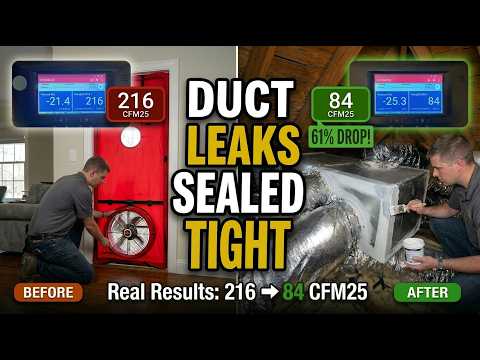 Video
Video When Metal Ducts Sweat: Stopping Mold, Mildew & Attic Air Infiltration
Watch the video →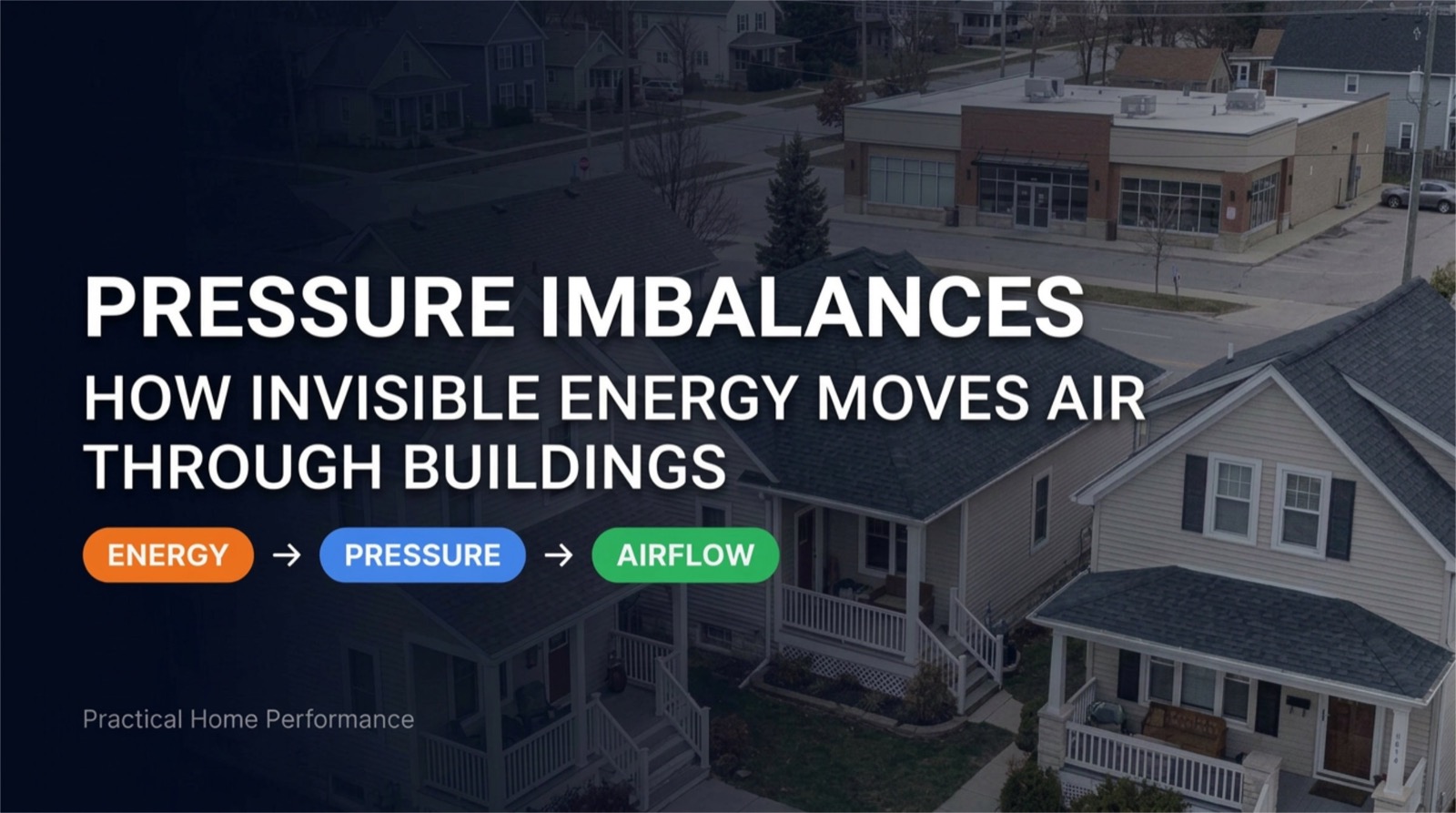 Article
 Pressure Imbalances: The Invisible Energy Forces That Move Air Through Buildings
Stack effect, wind, and duct leakage push air through a house whether you plan for it or not. Understanding those forces is the difference between guessing and actually fixing a home.
Read the article → Video
Video ⚡️ The True Importance Of Air-Tight HVAC Ductwork (That's Why Your Utility Company Pays Us To Do It)
Watch the video → Video
Video Plenum Issues - Fixing Badly Installed, Leaky Ductwork In An Attic
Watch the video → Video
Video Properly Sealed Ductwork Saves Money - How Bad Is Your HVAC Ductwork?
Watch the video → Video
Video Diversified Energy Blower Door Testing - Whole House Air Leakage Test
Watch the video → Video
Video Diversified Energy HVAC Duct Blaster Testing - Testing Your Duct-Work For Air Leakage
Watch the video → Video
Video Home Air Sealing - Energy Efficiency & Improved Indoor Air Quality
Watch the video →Have a question this didn't answer?
Check the FAQ or send a message.